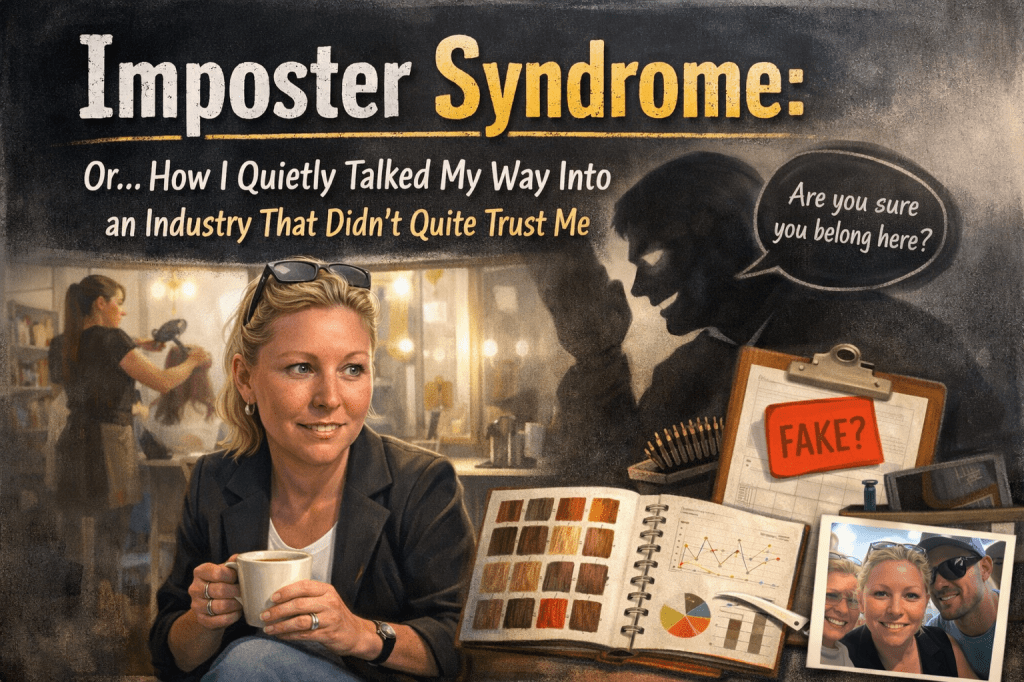
When I was 16 years old, all I wanted to be was a hairdresser.
My mum had other ideas.
“I’d love you to become a hairdresser… but finish your education first. You’re too intelligent to leave school now. Do your A-levels. You’ll always have something to fall back on.”
At the time, I was devastated. (And this tells me a lot about why the industry still suffers from a lack of respect! My mum didn’t appreciate the science of colour theory. The maths required for mixing… the intelligence required)
Me at 16… I didn’t care either… I just wanted to earn money immediately.
So after education; life took me in a completely different direction.
(Turns out mum was sort of right… there was a brain there somewhere)
So my career consisted of
- Law
- Banking
- Finance
- Trading
- Training
- Sales
- Recruitment
- Management
- Advertising
- Journalism
- Public speaking (Particularly weird for the shy girl that couldn’t read a sentence out loud at school)
- …….And Yes my career list is long! 😂
And somehow… eventually… I returned to hair.
I always felt I had a career with no direction at all.
But today I was chatting with someone about my career, and a funny story about my boss, Peter which reminded me of something.
We’ve worked together on and off for nearly 15 years. We’ve annoyed each other, argued, laughed, I’ve left, I’ve come back, and we’ve probably questioned each other’s sanity more than once.
Yet somehow, underneath all of that, there’s always been mutual respect.
It made me stop and think…
Maybe my career (and potentially yours) hasn’t been as random as I always believed.
Industries may change.
Products will change.
Job titles change.
But what I love doing never changes!
Underneath every role, every company and every industry has always been the same question:
How do you take something complicated and make it memorable?
Whether that was pensions…
Sales…
Recruitment…
Or now the science behind hair and scalp health…
(And trust me that’s much harder than finance and trading metals)
Underneath all that… one thing never changed: the love of helping people understand. And that’s what hair artists do:
- Understand people: Their life; their crisis, their family, their struggles. The understanding of what it takes for them to move forward!
- And yes that often starts with hair!
Today, thirty years later, I’ve worked in the hair industry for fifteen years.
Not as the celebrity stylistic I imagined…
But standing on stages, helping people understand science, confidence and business.
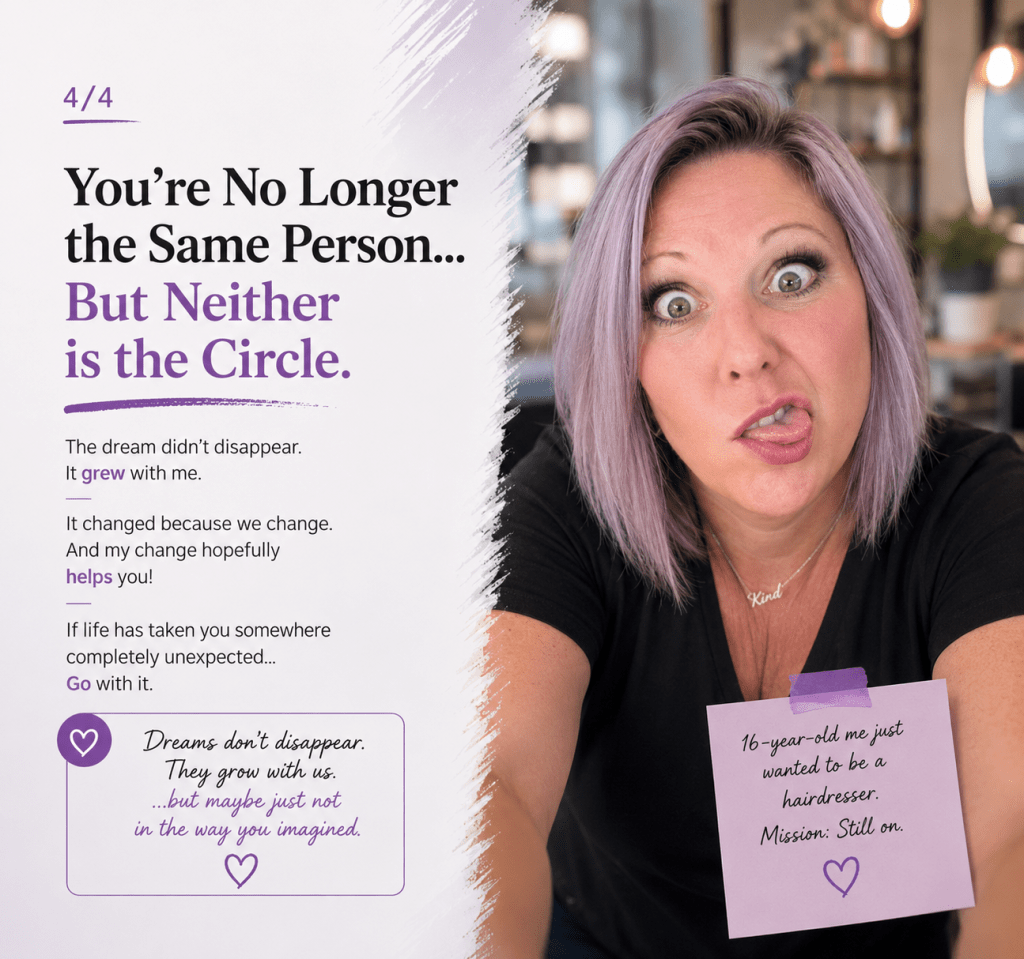
Turns out sixteen-year-old Heidi wasn’t wrong after all.
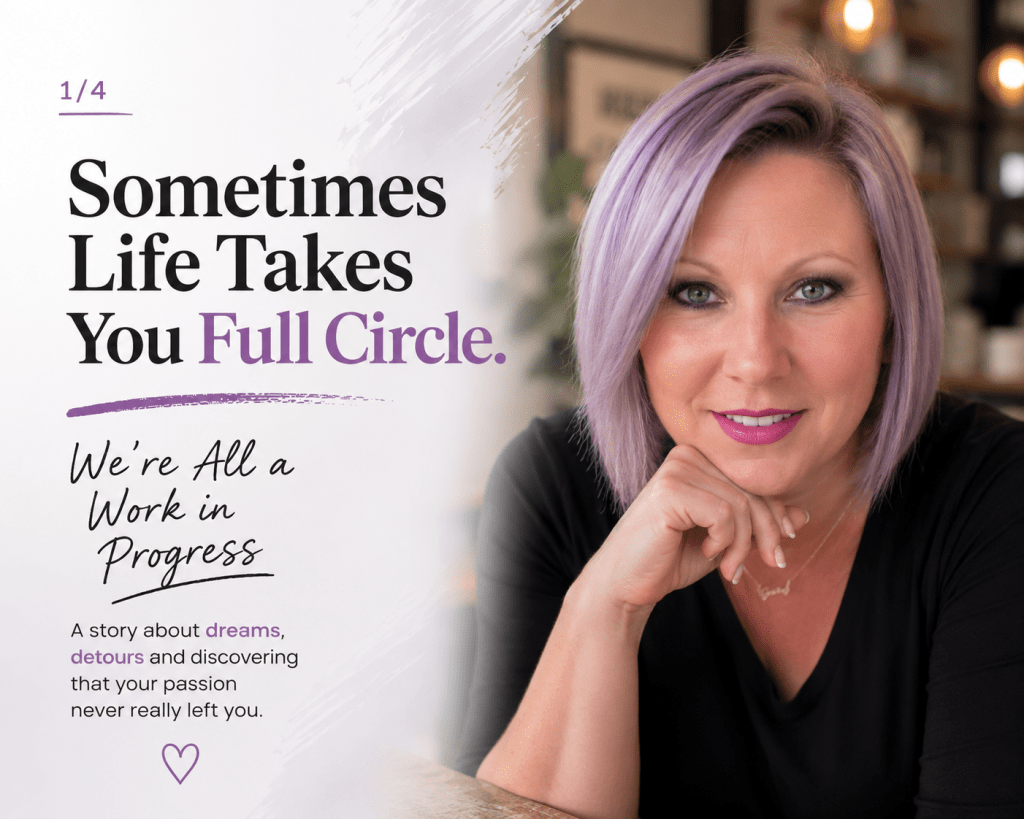
Sometimes life takes you full circle.
But by the time you get back to the start of that circle; you’re no longer the same person… but neither is the circle.
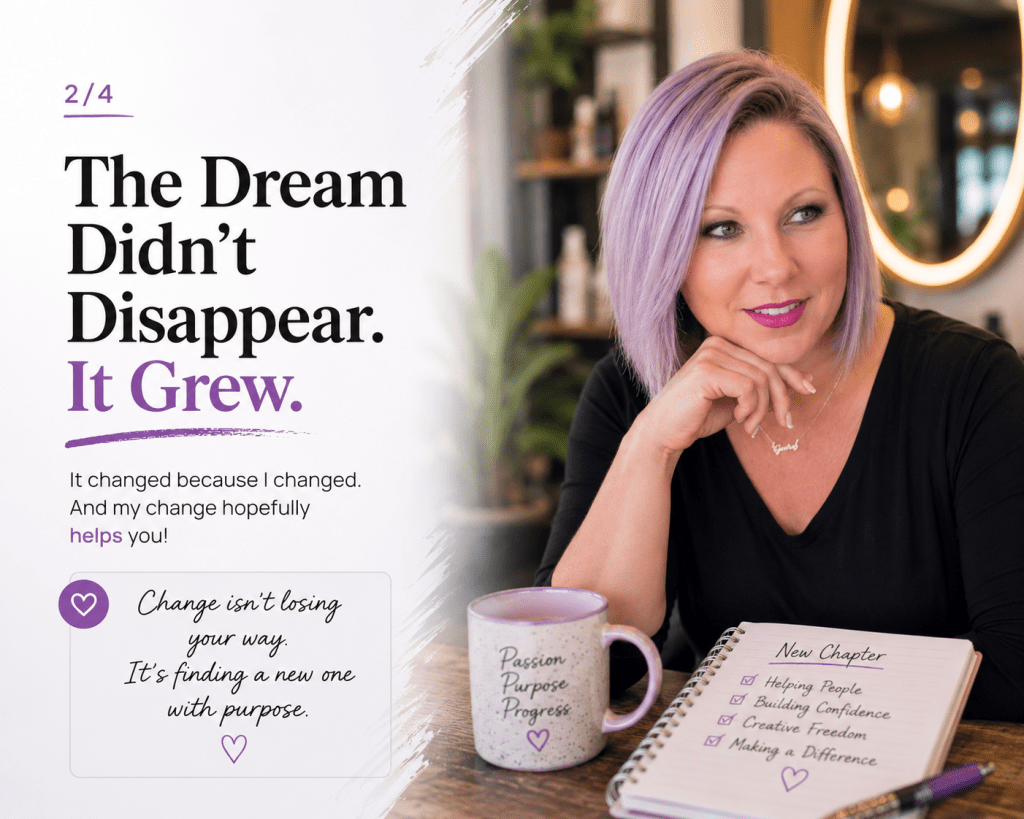
The dream didn’t disappear.
It grew.
It changed because we change. And my change hopefully helps you!
If life has taken you somewhere completely unexpected…
Go with it.
You never know where those experiences are leading.
One day you might find yourself doing things you never imagined possible.
You might interview famous entrepreneurs (yep done that too.., and they’ll never impress like you imagine btw)
Or you might just find yourself back in the very industry you thought you’d left behind …..
Stand on stages.
Teach hundreds of people.
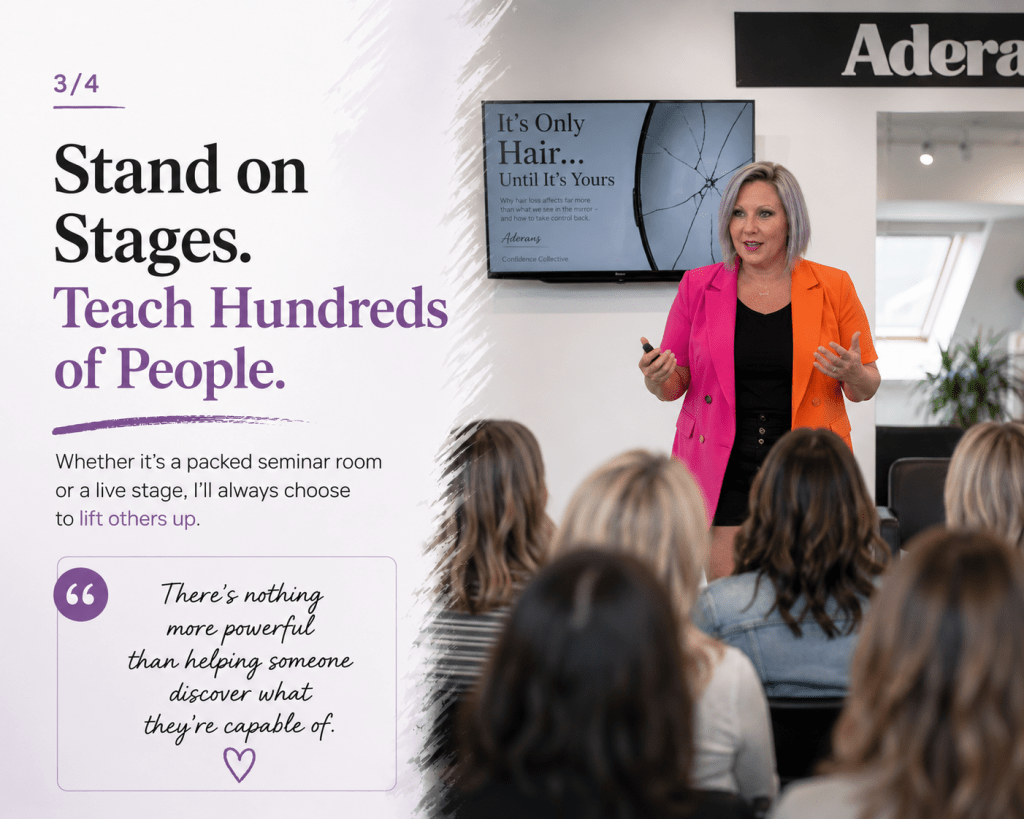
So thank you hair industry for allowing me to give you my knowledge… I was away for 20 years… and yes absolutely …do not trust me with a full head of foils … but thank you for being open to my knowledge!
For those that aren’t hairdressers: the theme is simple….
A circle may still be a circle… but give it the space to expand!
Dreams don’t disappear. They grow with us.
If life has taken you somewhere you never expected, don’t fight it. Follow it.
One day you might realise you’ve arrived exactly where you always wanted to be…
… but maybe just not in the way you imagined.